

Editorial – TINUBU – The Turmoil and the Agenda
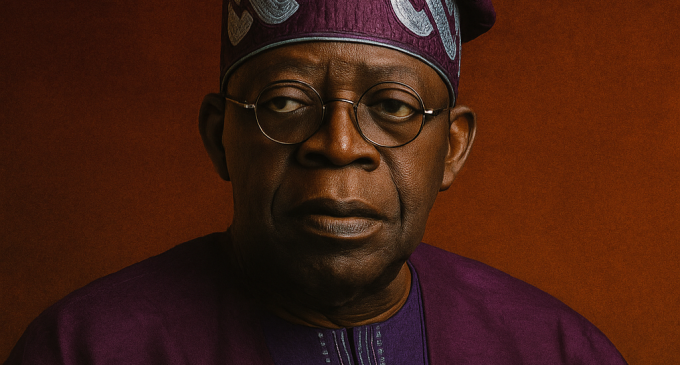
TINUBU – The Turmoil and the Agenda
By Hf Dauda MoiSoro
Published: March 9, 2024
“We should measure the prosperity of a nation not by the number of millionaires, but by the absence of poverty, the prevalence of health, the efficiency of the public schools, and the number of people who can and do read worthwhile books.”
— W.E.B. Du Bois
There is no future without the present. But in Nigeria, we have lost or forgotten the past, possess no clear present, and have mortgaged the future—without any ownership for the people.
The problems we face are elementary, almost cliché by now. Yet, the discourse is still dominated by pundits quick to take sides, point fingers, and conveniently absolve themselves of blame. The truth is: we are the problem.
We Nigerians must confront the reality that our leaders are a reflection of us. We criticize them but seldom hold ourselves accountable for empowering or tolerating their failures. President Bola Ahmed Tinubu arrives at a critical time. He must uphold the structures and responsibilities outlined in the Constitution. And Nigerians must begin to demand constitutional loyalty from every public official.
A Nation Where Systems Don’t Work
The rot in our institutions is visible. Corruption thrives across all levels—executive, legislative, and judicial. Public service delivery is broken. Governance has been reduced to a patronage system dominated by incompetence and cronyism.
Key government functions are outsourced to political appointees, while career civil servants—trained to serve—are sidelined. The National Assembly, Judiciary, energy sector, and financial institutions like NNPC and the CBN no longer function as envisioned. Instead, loyalty to individuals trumps competence. Our security agencies are ineffective, and our Local Governments have been rendered useless—gutted by State Governors who believe ordinary Nigerians are too dumb to govern themselves locally.
The only system that works in Nigeria is corruption.
Bribery, embezzlement, money laundering, favouritism, pension fraud, and subsidy scams flourish. Despite bold anti-corruption rhetoric, the ICPC and EFCC remain toothless, unable to prosecute powerful former governors due to legal loopholes. In 2005, it was reported that state governors collectively held over $175 billion in foreign assets—an amount that has likely ballooned since.
The Law is the Law
Corruption is a crime. Yet, in Nigeria, it is a crime without consequences. Respect for the law has become optional. The rule of law must become a standard, not a selective tool used against political enemies. Every corrupt Nigerian must be held accountable—regardless of status.
“The substance of the law at any given time pretty nearly corresponds with what is then understood to be convenient.”
— Oliver Wendell Holmes, Jr., The Common Law (1881)
If our laws reflect only convenience and not justice, then we are not a society governed by law.
Fuel Subsidy, Hunger, and the Poor
The Renewed Hope Agenda offers a blueprint, but it must not be a slogan. Tinubu must admit mistakes and correct them swiftly. Removing fuel subsidy without a robust safety net has only deepened hunger and discontent. Giving out rice, flour, and cement is not a policy—it is a reaction. A holistic strategy to wean Nigeria off subsidies must be pursued without putting lives at risk.
I say this as someone who supported and campaigned for this government. I still believe that Tinubu can lead a focused, reformist government—but he must rise above the noise and deliver systemic change.
A Bleeding Nation
Nigeria has become a land of murdered hopes. We cried for independence and killed our brightest in haste. We fought for unity and slaughtered millions in a war we never healed from. We tolerated corruption and watched as governments looted the treasury with abandon. When human rights became the global currency, Nigeria lost its moral standing.
We’ve embarked on countless lofty goals—electricity reforms, education reforms, anti-terrorism campaigns—only to fall back to the same place. Peace is gone, economic activity is crippled, and insecurity is now normalized.
What Then Must We Do?
We know the problems. We lack the will to fix them. So why do we expect tomorrow to be better?
Tinubu is challenged. And we, the people, are watching. He must listen, learn, correct mistakes, and confront Nigeria’s vices with relentless energy. Nigerians are strong-willed. We expect no less from our President.
Let us remind those in power: the promise to fix Nigeria must be kept. We cannot afford failure. The Agenda must succeed.
Lastly, President Tinubu must resist the urge to centralize everything in Lagos. That mindset breeds mistrust, hints at secessionist paranoia, and undermines national unity. We must not build a country that prepares for its own collapse. We must not continue a tradition of uprooting institutions—like Obasanjo did—only to replicate failure. Instead, let us build anew, together.
Nigeria will remain one. And Nigeria will succeed. The people are ready. Tinubu must now lead with vision, humility, and purpose.
“Otherwise, of where we came, so shall we return.”
—
Hf Dauda MoiSoro
hdfika@gmail.com
️February 9, 2024