Potiskum Drowning in Neglect: When Rains Become Disasters.
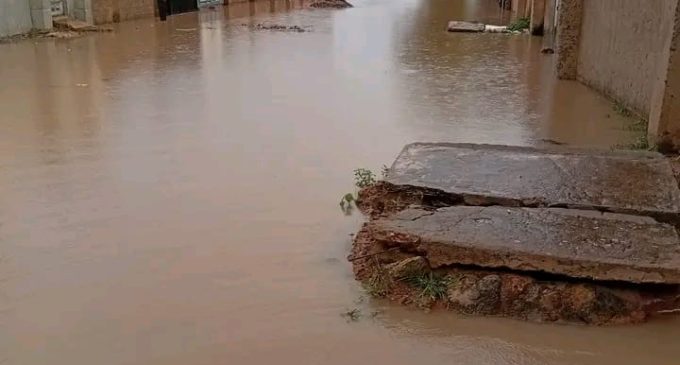
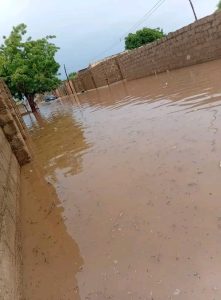
This evening, Potiskum witnessed a heavy, fast-moving rainstorm that lasted barely three hours. Yet in that short span of time, the skies dumped enough water to turn nearly every street into a rushing stream. Cars stalled, children waded through dirty water, and families watched helplessly as floodwaters threatened their homes and shops.
As I stood watching, I was appalled—not merely by the intensity of the rain, but by the sheer scale of flash flooding across the town. It was not nature alone that caused this; it was also our own doing. Poor drainage and blocked waterways turned what should have been a passing storm into a town-wide disaster.
What struck me most was the fact that the drains were not just overwhelmed—they were choked. Plastic bottles, sachet water bags, household trash, and market refuse clogged every channel. Rainwater had nowhere to go but into our streets, our compounds, our very doorsteps.
This is where we must confront a painful truth: our community has grown lazy and complacent. Once upon a time, it was the responsibility of every household to keep the drainage in front of their home clean. Neighbours would gather with hoes, shovels, and cutlasses to clear gutters before the rains came. Today, that culture of collective responsibility has eroded. We wait for government workers who never come, or for miracle solutions that never arrive.
Where is our sense of community? Where is the principle that we are our brothers’ keepers—that we protect one another as well as our own property? How do we sleep at night surrounded by dirty sewage water and yet fail to pick up the simplest of tools to save ourselves?
Yes, the government has a duty to build modern drainage systems. Yes, urban planning in Potiskum has failed for decades. But we cannot escape our share of responsibility. Flooding will not stop by prayer or complaint alone. It will stop when we, as citizens, rise to the challenge: when shopkeepers clear the gutter in front of their stalls, when households remove the refuse behind their compounds, when markets and mosques mobilize their members for community sanitation.
The rains will come again tomorrow, and the next day. The question is: will Potiskum continue to drown in its own neglect, or will we rediscover the discipline and unity that once defined us?
The answer, I believe, lies not in waiting, but in action—action that begins with each of us, hoe in hand, clearing the way for the water to flow.
_Hf Dauda MoiSoro_
_August 30, 2025_