Nigeria’s National Assembly: A Nation’s Betrayed Hope. — by Hassan Husaini, mni

Nigeria’s National Assembly: A Nation’s Betrayed Hope.
By Hassan Husaini, mni
The grand vision of Nigeria’s 1999 Constitution was to anchor our democracy on a foundation of balanced power and broad representation. To achieve this, the framers established a bicameral National Assembly, a parliament of two houses designed to be the people’s watchdog and the states’ guardian. The House of Representatives, with its 360 members elected by population, was to be the voice of the populace, wielding the power of the purse and holding the executive to account. The 109-member Senate, representing the 36 states equally, was conceived as a deliberative ‘cooling saucer,’ offering sober second thought and protecting regional interests. Together, these two arms were meant to be the sturdy pillars upon which a stable and accountable government would stand. Yet, over two decades later, the pressing question that echoes through the halls of power and the streets of the nation is whether this institution has become a monument to political opportunism and a profound betrayal of its constitutional mandate.
The fundamental flaw lies at the very beginning: the recruitment process. The path to becoming a lawmaker in Nigeria is a flawed funnel that systematically filters out competence and integrity. It is skewed by exorbitant nomination fees that commoditize candidacy, powerful ‘godfathers’ who demand absolute allegiance, and party primaries marred by blatant vote-buying. The general election, often dominated by ethno-religious sentiment and the unfair advantage of incumbency, fails to correct these initial flaws. The result is an Assembly populated by political jobbers, businesspeople seeking influence over government contracts, and the mediocre, while intellectuals, technocrats, and development-focused individuals are consistently sidelined. When the wrong calibre of people are recruited, it is a triumph of hope over experience to expect stellar performance from the hallowed chambers.
This flawed foundation has manifested in a legacy of consistent shortfalls. Instead of acting as a robust check, the Assembly has often been a compliant rubber stamp for the executive, hurriedly approving loans, budgets, and key appointments with minimal scrutiny. The institution has been perpetually shadowed by a canopy of corruption, where the line between legislative duty and criminal enterprise is often blurred. A stark illustration of this culture came from a chilling 2018 confession by former Deputy Senate President, Senator Ibrahim Mantu. He brazenly detailed on national television how he used to rig elections for the executive and, more pertinently, how he and his colleagues extorted ministerial nominees. “If we don’t want you,” Mantu stated, “the executive will bring you, we will frustrate you and make sure you are not confirmed… unless we see… you know…” This admission provided a rare, public glimpse into a system where constitutional confirmation hearings were treated as a shakedown operation. Years later, this culture was shown to be persistent when then-Governor Nasir El-Rufai alleged in 2021 that a sitting senator had demanded a N500 million bribe to facilitate his committee’s approval of a World Bank loan intended for a development project in Kaduna State. El-Rufai’s story, whether disputed or not, perfectly mirrors the extortionate ecosystem Mantu had described, suggesting a systemic problem where the legislature’s power is perverted for personal gain. Further diverting from their duties, lawmakers are perpetually engaged in a cynical game of cross-carpeting from one party to another, betraying the mandate of their voters. This political musical chairs is enabled by a judiciary providing conflicting judgements on what constitutes a legal defection, creating a safe haven for opportunists and leaving constituents effectively voiceless.
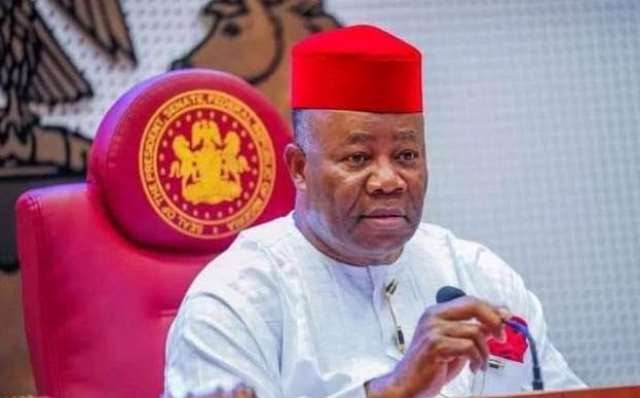
The current 10th National Assembly has come to embody these systemic failures, leading to a widespread public apprehension that it may be the worst in our democratic history. Its leadership is under a heavy cloud, with the Senate President, Senator Godswill Akpabio, and several other key senators facing ongoing investigations by the EFCC for alleged corruption in their previous roles as governors, creating an inherent conflict of interest. The legitimacy of the Assembly is further undermined by the electoral process that produced its members. Both Senate President Gods will Akpabio and Senator Ahmed Lawan emerged from processes widely seen as subverting party democracy, with Lawan controversially imposed as a senatorial candidate after losing a presidential primary, a shameless subversion later overturned by the courts. Compounding this, the leadership of Senator Akpabio has been frequently accused of high-handedness, a charge that gained national prominence during the suspension of Senator Abdul Ningi for raising concerns over budget padding, and the controversial treatment of Senator Natasha Akpoti-Uduaghan, has depicted such actions as avoidable distractions for a serious legislative body. This pattern of conduct has not only reduced the prestige of the upper chamber domestically but has significantly brought it into international disrepute.
The Assembly’s skewed priorities and damaged reputation were starkly revealed on the international stage. When the United States Congress convened urgent hearings after Nigeria was profiled as a ‘Country of Particular Concern’ for religious freedom, the halls of the U.S. The Capitol echoed with debates about the plight of Nigerian citizens. The fact that Nigeria’s profound security problems became the subject of a congressional hearing in a foreign land, while our own National Assembly chambers were marked by a deafening silence, stands as a further and profound indictment of the institution. There were no urgent summons for our security chiefs or a bipartisan committee to address the grave allegations. This profound indifference stands in jarring contrast to the Assembly’s well-documented alacrity in sitting during recess to approve billions in executive borrowing and routinely confirming ministerial nominees.
The most devastating evidence of the Assembly’s failure, however, is the persistent and escalating security crisis. A glaring symptom of this failure is the gross misallocation of security resources, which the legislature has failed to correct. It is reported that out of the nation’s estimated 387,000-strong police force, about 185,000 officers are dedicated to providing personal security for less than 5000 VIPs, and other private demands for security, including senators, ministers, and other public officials and even private persons. This leaves a meager and overstretched force for the over 200 million ordinary Nigerians facing banditry, kidnapping, and terrorism. That the National Assembly has overseen—and benefited from—a system that prioritizes the protection of the political elite over the populace is the most damning indictment of its role in the national security collapse.
The redemption of this critical institution is not impossible, but it requires a fundamental, multi-pronged intervention. First, we must democratize the political recruitment process through a Political Party Internal Democracy Act that mandates direct primaries, with INEC empowered to enforce compliance. Second, constitutional integrity must be enforced, with the judiciary providing clear precedents to end defection impunity and anti-graft agencies fast-tracking corruption cases against sitting lawmakers. Third, we must institutionalize robust oversight by televising all key hearings and publishing an annual ‘Legislative Performance Index’ by an independent body. Finally, citizen engagement must be fostered through mandated constituency offices and sustained, targeted advocacy campaigns.
The task of redeeming the National Assembly is not solely that of the lawmakers themselves; they are products of a system we have tolerated for too long. The primary onus is on the Nigerian citizenry—the media, professional bodies, and the everyday voter—to become the ultimate oversight. We must transition from being passive complainants to active, demanding stakeholders. The Two Arms of the National Assembly were designed to be the pillars of our democracy; it is our collective duty to ensure they are not its gravediggers. The blueprint for a functional legislature exists; what has been missing is the courage to demand its fulfillment.