NIGERIA’S DEMOCRACY IS DUE FOR MAJOR SURGERY: WHY WE MUST RETHINK LOCAL GOVERNMENT ELECTIONS AND OUR ENTIRE ELECTORAL CALENDAR

NIGERIA’S DEMOCRACY IS DUE FOR MAJOR SURGERY: WHY WE MUST RETHINK LOCAL GOVERNMENT ELECTIONS AND OUR ENTIRE ELECTORAL CALENDAR
The time has come to stop merely managing democracy and start fixing it.
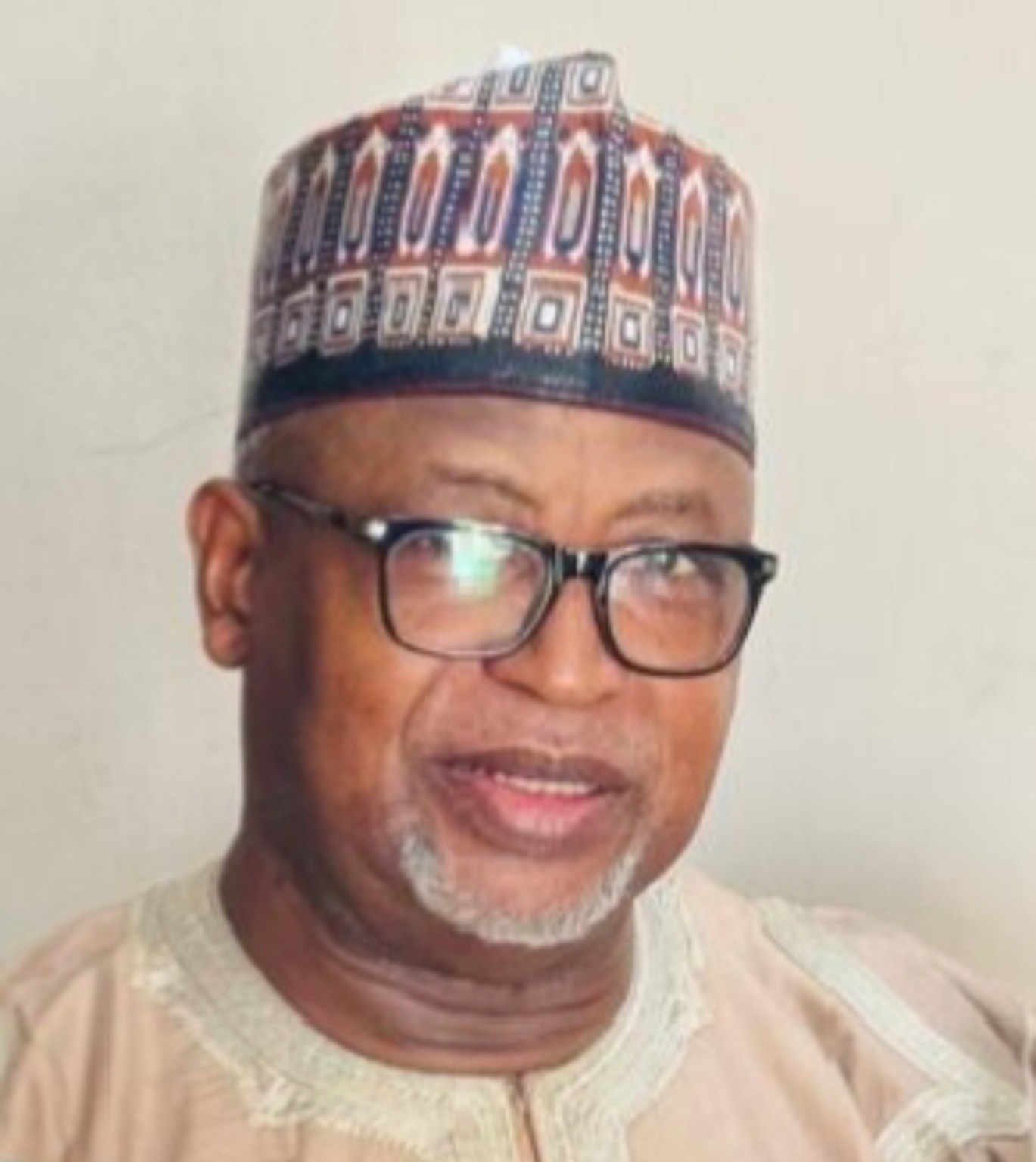
By Otunba (Dr.) Abdulfalil Abayomi Odunowo
For twenty-seven years, Nigeria has sustained uninterrupted democratic rule. We’ve held elections, sworn in governments, and transferred power through constitutional means. Even so, beneath those democratic milestones sits an uneasy truth: our democracy remains structurally fragile because some of its institutions no longer serve the purpose they were created to serve.
A country that refuses to reform its democratic institutions will, sooner or later, find itself trapped in outdated systems that no longer inspire the confidence of its people.
Nigeria has reached that stage.
The debate, at this point, shouldn’t be whether reform is necessary. That ship has sailed. The real issue is whether our leadership, the Presidency, the National Assembly, state governors, political parties, and all patriotic stakeholders, has the courage to carry out a genuine democratic revolution. Not cosmetic tinkering, but deep, structural surgery on the architecture of our elections and governance cycles.
One of the frailest links in Nigeria’s democratic structure is the conduct of local government elections.
The architects of our federal system imagined local governments as the tier of government closest to the people. They were supposed to be testing grounds of democracy, places where citizens could directly shape governance and hold leaders to account.
Sadly, reality has too often fallen short of that aspiration. Across many states, local government elections have regularly been criticised for lacking real competition and for failing to inspire public trust. Outcomes are widely seen as predictable long before the first ballot is cast, often amounting to what independent observers and even the INEC Chairman have described as the “coronation” of ruling-party candidates. State Independent Electoral Commissions (SIECs) remain structurally dependent on governors for funding, appointments, and operational control.
Once citizens lose faith that their votes can truly shape local leadership, democracy itself starts to lose meaning.
Democracy can’t survive on elections alone. It survives on credible elections. When credibility disappears, participation falls. When participation falls, legitimacy erodes. And when legitimacy erodes, democracy becomes little more than ritual.
That is why Nigeria must begin a frank national conversation about the future of SIECs.
If an institution repeatedly struggles to earn public confidence, responsible democracies don’t keep defending it, they reform it. The time has come to place all elections in Nigeria, including local government elections, under the Independent National Electoral Commission (INEC), thereby creating one nationally recognised electoral standard for every Nigerian voter.
A single electoral umpire wouldn’t fix every problem overnight. Still, it would remove the fragmented system that has produced recurring controversy and uneven standards across the federation. Mature democracies have long understood the value of strong, independent national election management bodies. India’s Election Commission, with its constitutional autonomy and nationwide mandate, has become a global benchmark for credibility and scale.
Many Latin American and African transitions strengthened democracy precisely by consolidating electoral authority and shielding it from local executive capture.
The second structural flaw is just as troubling.
How does Nigeria justify a situation in which Presidents, Governors, Senators, Members of the House of Representatives, and State Assembly members enjoy constitutionally recognised four-year mandates, while many local government officials serve only three years?
There is no persuasive democratic logic behind that inconsistency. Local governments prepare annual budgets. They launch infrastructure projects. They draw up development plans. Yet before many of these programmes can mature, another election cycle is already upon them. Governance gives way to politics. Development yields to campaigns. In many ways, three-year tenures have unintentionally encouraged permanent electioneering at the grassroots.
Nigeria deserves better. Every elected office should run on a harmonised four-year tenure, one that gives enough room for planning, implementation, evaluation, and accountability. Countries that have aligned local and higher-level terms have reduced the constant disruption caused by short cycles and improved concentration on service delivery.
But perhaps the most neglected weakness in our democracy lies in the way we conduct elections themselves.
Every election cycle places immense pressure on INEC. Within a compressed period, the Commission must recruit hundreds of thousands of temporary staff, deploy sensitive electoral materials across one of Africa’s largest countries, coordinate security agencies, train election officials, manage litigation, supervise political parties, and conduct several categories of elections almost at once. Frankly, even the most efficient institution would struggle under that weight.
So why keep stretching our electoral machinery to its breaking point?
Why not redesign the calendar itself?
Nigeria should adopt a staggered constitutional electoral cycle that promotes efficiency, continuity, and better governance.
Under this model:
Executive Elections should be held together:
• President
• Governors
• Local Government Chairmen
About two years later, Nigerians would elect:
• Members of the National Assembly
• Members of State Houses of Assembly
• Local Government Councillors
The benefits are substantial. INEC would gain greater operational efficiency. Election logistics would become easier to manage. Security agencies could coordinate better. Election costs could become more predictable over time. Governance, too, would benefit from stronger continuity because not every elected institution would expire at the same moment.
Most importantly, Nigerians would be able to assess executive performance separately from legislative performance. Citizens could ask distinct questions: Has the President performed? Has the Governor delivered? Has the Local Government Chairman improved grassroots governance? Then, two years later, they could evaluate their legislators on their own terms. This creates stronger accountability instead of reducing elections to one broad political wave driven mainly by party sentiment.
Empirical experience from evolved democracies backs this approach. The United States deliberately staggers its elections: the President and many governors every four years, the entire House of Representatives every two years, and one-third of the Senate every two years. That design creates continuous accountability while preventing total simultaneous turnover.
Studies of election consolidation in American cities show that aligning local races with higher-turnout national elections dramatically increases participation, improves representation of underrepresented groups, and lowers costs. In India, decades of research and high-level committees have documented the governance and fiscal costs of perpetual staggered state elections; proposals for greater synchronisation (“One Nation, One Election”) rest on evidence that simultaneous or better-aligned cycles historically correlated with higher growth, less disruption from the Model Code of Conduct, and more focused policymaking.
New Zealand’s 1993 shift from first-past-the-post to mixed-member proportional representation, driven by public demand, a royal commission, and referendums, shows that mature democracies periodically overhaul electoral rules when the old system loses legitimacy, and then preserve those gains through review mechanisms. Constitutional reform should not be feared. Strong democracies evolve.
The United States has amended its Constitution many times. India continues to refine its electoral processes and institutional arrangements. Japan conducts periodic unified local elections to concentrate attention and resources. Chile, Mexico, and others have repeatedly reformed electoral rules and management bodies to expand representation, autonomy, and credibility. Nigeria should have no fear of doing the same.
Reforming our electoral architecture is not an admission of failure. Far from it. It is a sign of democratic maturity. History shows that nations decline not because they refuse to hold elections, but because they refuse to improve the institutions that conduct them.
Nigeria stands at yet another constitutional crossroads. We can keep defending systems that growing numbers of citizens no longer trust, or we can find the courage to modernise our democracy before public confidence weakens even further. The strongest democracies are not those that never change. They are the ones that recognise when change has become unavoidable. That time is here.
I therefore call on the National Assembly, the Presidency, state governments, political parties, civil society organisations, constitutional scholars, and every patriotic Nigerian to seize this moment and begin a comprehensive review of our electoral system. Future generations will not ask whether we protected outdated institutions. They will ask whether we had the wisdom and courage to build stronger ones.
Nigeria’s democracy has survived. Now it must evolve.
The future of our Republic depends not simply on the leaders we elect, but on the quality, credibility, and fairness of the democratic institutions through which we elect them.
Signed
Otunba (Dr) Abdulfalil Abayomi Odunowo
National Chairman AATSG
ASIWAJU Ahmed Tinubu Support Group.
Weebesday 5th of August 2026.