Missing Titanic sub crew killed after “catastrophic implosion”
Sub debris found
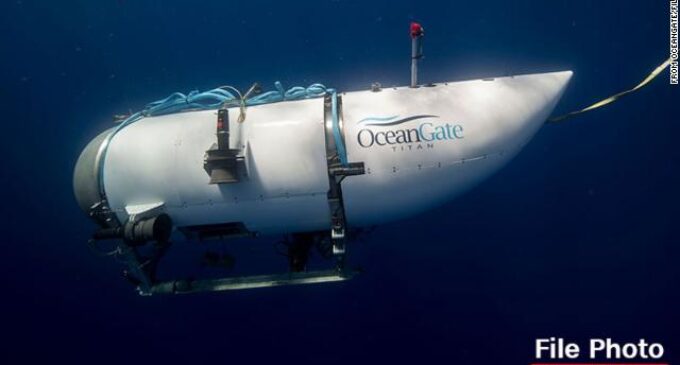
The Titanic-bound submersible that went missing on Sunday with five people on board suffered a “catastrophic implosion,” killing everyone inside, US Coast Guard Rear Adm. John Mauger said Thursday. A remotely operated vehicle found identifiable pieces of the vessel, known as Titan, in a debris field about 1,600 feet away from the bow of the shipwreck, Mauger said. The Titan began its descent Sunday to explore the wreckage of the Titanic, located about 13,000 feet below sea level in the North Atlantic Ocean.
There does not appear to be a connection between the banging noises picked up by sonar buoys earlier this week, Mauger said. He added that devices set up during the search did not record any “significant broadband sound” caused by a catastrophic failure — an indication the submersible may have imploded during its initial descent.
The ship that helped launch the Titan submersible will return to port later tonight or tomorrow
From Miguel Marquez and Aaron Cooper
The Polar Prince, a vessel used to transport the Titan submersible to the site of the Titanic wreckage, is departing the area today.
It will return to St. John’s, Canada, either late Friday or early Saturday morning, a source with Horizon Maritime, the company that owns the ship, told CNN.
Marine traffic-tracking sites show a line of several other ships also headed back to St. John’s this morning.
UK prime minister Rishi Sunak’s thoughts are with loved ones of those killed on Titan sub, spokesperson says
From CNN’s Sharon Braithwaite in London
UK Prime Minister Rishi Sunak’s thoughts are “very much” with the loved ones of those that perished on the Titan submersible, his spokesperson said Friday, according to the UK Press Association.
“His thoughts are very much with the loved ones of those who have died in this tragic incident and they have been through an unimaginably difficult ordeal in the last few days,” the spokesperson said, adding that the Foreign Office is “in touch with those families to provide support.”
UK Foreign Secretary James Cleverly on Thursday expressed his condolences and said the UK government is closely supporting the families of the British citizens who died on board the Titan submersible.
Three British citizens were onboard: Hamish Harding, Shahzada Dawood and his son, Suleman.
OceanGate co-founder cautions rushing to judgment over catastrophic loss of submersible
From CNN’s Kristine Sgueglia
OceanGate co-founder Guillermo Sohnlein cautioned rushing to judgment without the data following the catastrophic loss of the submersible.
“There are teams on site that are still going to be collecting data for the next few days, weeks, maybe months, and it’s going to be a long time before we know exactly what happened down there,��� he told CNN Friday. “So I would encourage us to hold off on speculation until we have more data to go on.”
Sohnlein left the company in 2013 and was not involved with the voyage or the development of the Titan submersible. He still maintains minority ownership of OceanGate.
He added, “safety was the number one priority” for himself and CEO Stockton Rush who perished along with four others on board.
“He was a very strong risk manager, and I believe that he believed that every innovation that he created — whether technologically or within the dive operations — was to both expand the capability of humanity exploring the oceans while also improving the safety of those doing it,” he said.
Friend of Nargeolet mourns loss, recalls previous dive trip to the Titanic with explorer
From CNN’s Kristina Sgueglia

A friend of Paul Henri Nargeolet, who was aboard the Titan submersible that imploded over the weekend, described the explorer as an “incredibly talented iconic legendary – the greatest deep diver that the world has ever known.”
Speaking to Anderson Cooper on CNN This Morning on Friday, Alfred Hagen recalled a previous trip on which he descended with Nargeolet in the Titan sub to the Titanic wreckage.
When descending, Hagen said the vessel is essentially in a “free fall” and when it reached the bottom, crewmembers had to “find the Titanic,” the bow and stern of which he describes are a “considerable distance apart.”
The experience was like “flying almost blind in a world far beyond the reach of lights,” he said.
It was a “world of perpetual midnight, and then suddenly if you’re lucky you see the ship appear out of the darkness,” he added.
“I don’t regret going, I do regret that I won’t be able to go again with PH.”
When they reached the bottom, he said, “PH would take over flying.”
“As far as the safety concerns, of course you were concerned, we all understood the risk we were taking.”
“There was a moment when the current kind of pushed us in closer than we intended and we got stuck and PH was able to maneuver us out and of course at that moment the thought flashes through your mind of – if we don’t get loose this could be it, but I was – that’s a risk that you accept,” Hagen said.
“And I’m tired of people coming in now to insult the high achievers and disparage wealthy people that want to break trail for the rest of humanity.
“These are risk takers, risk takers have always driven humanity forward and taking risk is what distinguishes us as men, and it’s the divine spark.”
As for Nargeolet, Hagen fondly recalled him being “equally at ease on the deck of a ship in a hurricane or sitting conversing in a Parisian café.”
Hagen said the loss of his friend had “broken my heart that a man of his dynamism will no longer shine his light in this world.”
What it was like inside the lost Titanic-touring submersible
From CNN’s Emma Tucker
Authorities have said the Titanic-touring submersible that went missing on Sunday suffered a “catastrophic implosion,” killing all five people on board while descending to explore the wreckage of the famous ship.
That submersible, known as “Titan,” began the two and a half hour trip early Sunday and lost contact with its mother ship, the Polar Prince, an hour and 45 minutes into the journey.
The tail cone and other debris from the missing submersible were found by a remotely operated vehicle about 1,600 feet from the bow of the Titanic, which rests about 13,000 feet deep in the North Atlantic Ocean, the US Coast Guard announced on Thursday.
The submersible’s operator, OceanGate Expeditions, issued a statement Thursday grieving the five men on board, including OceanGate CEO and founder Stockton Rush, British businessman Hamish Harding, French diver Paul-Henri Nargeolet, British billionaire Shahzada Dawood and his son Suleman Dawood.
The Titan was roughly the size of a minivan with only enough room for five adults. On a typical voyage thousands of feet towards the bottom of the North Atlantic ocean, life inside a submersible can go from hot to cold.
Unlike a submarine, a submersible has limited power reserves and needs a support ship on the surface to launch and recover it. Titan typically spent about 10 to 11 hours during each trip to the Titanic wreck, while submarines can stay underwater for months.
Read the full story:

Experts are searching for answers among debris of Titanic-bound submersible implosion
From CNN’s Elizabeth Wolfe and Rob Frehse

Investigators are continuing to scour the ocean floor for any insight into how a “catastrophic implosion” killed all five passengers of a Titanic-bound submersible that suddenly lost communication with its mother ship over the weekend, officials said.
A dayslong international search effort concluded Thursday after debris from the submersible – known as the Titan – was found about 1,600 feet from the historic wreckage of the Titanic. Military experts found the debris was consistent with the disastrous loss of the vessel’s pressure chamber, US Coast Guard Rear Adm. John Mauger announced.
The passengers killed were a Pakistan-born British businessman and his son, Shahzada and Suleman Dawood; British businessman Hamish Harding; French diver Paul-Henri Nargeolet; and Stockton Rush, the CEO of the vessel’s operator, OceanGate Expeditions.
As officials work to determine the timeline and circumstances of the accident, remotely operated vehicles will be used to map out the vessel’s debris field, which is more than 2 miles deep in the North Atlantic Ocean, Mauger said.
Officials have yet to conclusively determine whether the devastating implosion occurred at the moment when the submersible stopped communicating about 1 hour and 45 minutes into its dive, Mauger said.
A senior Navy official, however, told CNN that a Navy review of acoustics data detected an “anomaly consistent with an implosion or explosion” on Sunday in the general area where the Titan was diving when it went silent.
Read the full story:

Scottish university “profoundly saddened” by death of student Suleman Dawood
From CNN’s Sharon Braithwaite
The University of Strathclyde, in Glasgow, Scotland, said it is “profoundly saddened” by the death of 19-year-old student Suleman Dawood, who was one of five passengers killed in the implosion of the Titanic submersible over the weekend.
Suleman was a Strathclyde Business School student and had just completed his first year. His father, British billionaire Shahzada Dawood, was also on board.
“The staff and students of Strathclyde have been shocked and profoundly saddened by the death of Suleman Dawood and his father in this tragic incident,” a spokesperson for the University of Strathclyde said Friday.
“The entire University community offers our deepest condolences to the Dawood family and all of those affected by this terrible accident.”
British Asian Trust “deeply saddened” by death of Dawood father and son
From CNN’s Sophia Saifi

The British Asian Trust said Friday it is “deeply saddened” by the death of Shahzada and Suleman Dawood, who were on board a Titanic-bound submersible that imploded over the weekend.
The Pakistan-born British businessman and his son were two of five passengers killed in the disastrous implosion. The submersible’s loss of communication with its mother ship triggered an international search effort that concluded Thursday after debris from the vessel was found in the North Atlantic Ocean.
“The British Asian Trust is deeply saddened by the tragic news that our supporter Shahzada Dawood and his son Suleman have passed away. They were on board the missing submarine that set off to see the wreck of the Titanic,” the trust tweeted on Friday.
“Shahzada was a wonderful and generous man who supported our work in South Asia for many years, while his son was just emerging into adulthood with a promising future ahead.
“Our hearts and prayers are with family and friends at this unimaginable time of grief and loss. Our deepest condolences to them and everyone else who lost loved ones in this terrible incident.”
The Dawood Foundation posted a photo of Shahzada and Suleman on Friday with the statement: “With heavy hearts and great sadness, we grieve the loss of our Trustee, Shahzada Dawood, and his beloved son Suleman Dawood. Our thoughts and prayers are with the Dawood family at this tragic time.”
Search teams are scouring the sea floor for clues about the Titan’s fateful voyage. Here’s the latest
From CNN staff
The search for more debris from the Titan submersible continues into Friday as officials try to piece together a timeline of the vessel’s final moments.
On Thursday, authorities said the five passengers on the sub that was diving 13,000 feet to view the wreckage of the Titanic on the ocean floor died in a “catastrophic implosion,” bookending an extraordinary five-day international search operation.
Here’s what we know:
- Immediate next steps: Remotely operated vehicles will remain on the scene and continue to gather information from the sea floor, US Coast Guard Rear Adm. John Mauger said. It will take time to determine a specific timeline of events in the “incredibly complex” case of the Titan’s failure, Mauger said. The Coast Guard official said the agency will eventually have more information about what went wrong and its assessment of the emergency response.
- What is a catastrophic explosion? An underwater implosion refers to the sudden inward collapse of the vessel. At those depths there is a tremendous amount of pressure on the submersible and even the tiniest structural defect could be disastrous, experts said. At the depths of the Titanic wreck, the implosion would have happened in a fraction of a millisecond. Former naval officer Aileen Marty said the implosion would have happened before anyone “inside would even realize that there was a problem.”
- Debris: The remotely operated vehicle found “five different major pieces of debris” from the Titan submersible, according to Paul Hankins, the US Navy’s director of salvage operations and ocean engineering. The debris was “consistent with the catastrophic loss of the pressure chamber” and, in turn, a “catastrophic implosion,” he said. As of now, there does not appear to be a connection between the banging noises picked up by sonar earlier this week and where the debris was found. So far, they have located the Titan’s nose cone and one end of its pressure hulls in a large debris field, and the other end of the pressure hull in a second, smaller debris field.
- Timing: The US Navy detected an acoustic signature consistent with an implosion on Sunday and relayed that information to the commanders leading the search effort, a senior official told CNN. But the sound was determined to be “not definitive,” the official said. Mauger said rescuers had sonar buoys in the water for at least the last 72 hours and had “not detected any catastrophic events.” Listening devices set up during the search also did not record any sign of an implosion, he added.

- Who was on board: Tour organizer OceanGate Expeditions said Hamish Harding, Shahzada Dawood and his son Suleman Dawood, Paul-Henri Nargeolet and OceanGate CEO Stockton Rush died in the sub. They “shared a distinct spirit of adventure,” the company in a statement.
- Reaction: Nargeolet, a French diver, was an incredible person and highly respected in his field, said his friend Tom Dettweiler, a fellow ocean explorer. The president of The Explorers Club said the group is heartbroken over the tragic loss. Two passengers, businessman Harding and Nargeolet, were members, it said. Engro Corporation Limited, of which Shahzada Dawood was Vice Chairman, said the company grieves the loss of him and his son. The governments of Pakistan and the United Kingdom also offered condolences.
- Similarities with famous shipwreck: James Cameron, who directed the hit 1997 movie “Titanic” and has himself made 33 dives to the wreckage, said he’s worried the Titan submersible’s implosion will have a negative impact on citizen explorers. He also said he saw “a parallel” with the Titanic due to “unheeded warnings about a sub that was not certified.”
Like the Titanic, Titan’s legacy may be a rethink of maritime rules
From CNN’s Brad Lendon

After RMS Titanic sank on its maiden voyage across the Atlantic in 1912, governments on both sides of the ocean took a hard look at whether more could have been done to protect the some 2,200 people aboard, including the more than 1,500 who died.
The result was the Convention for the Safety of Life at Sea (SOLAS). Passed in 1914, its framework stands to this day, with many of its rules directly evolving from the Titanic tragedy.
With the implosion of the submersible Titan as it dived down to the wreck of the Titanic this week, killing all five people aboard, experts say there may be a new push for rules governing new high end, big dollar tourism of the kind being practiced by OceanGate Expeditions, the company that ran the Titan.
The unsinkable ship: When the Titanic set sail from Southampton, it was the world’s largest ocean liner, built with state-of-the-art maritime technology that many thought made it unsinkable.
Such was the belief in the Titanic that safety regulations of the day were not updated to keep pace with the technology.
Lessons from Titan: Maritime experts and historians have noted the Titan submersible operated outside of the regulations prompted by the Titanic disaster, and did not need to conform to safety regulations, since it operated in international waters.
While innovators and explorers may push the limits — or even break the rules — for scientific advancement, experts say there should be a higher safety threshold for paying passengers, like three of the dead aboard Titan, and that a rethink of the international rules governing such expeditions may be in order, just as they were re-examined after the Titanic sank.
“It’s quite possible that the Titan might actually be the catalyst for more regulation within the submersibles field,” said Per Wimmer, a Danish philanthropist and adventurer.
Read more here.
“Majority of the vessel” must be recovered to know what happened to Titan submersible, expert says
Many questions remain as authorities continue searching for debris from the Titan submersible, including when the implosion happened and what exactly went wrong with the sub.
So far, search teams have located the Titan’s nose cone and one end of its pressure hulls in a large debris field, and the other end of the pressure hull in a second, smaller debris field.
Bobby Chacon, retired FBI special agent and former leader of the FBI dive team, told CNN that a debris field like the one search teams discovered could have been created by an almost simultaneous implosion and explosion of the submersible.
“What happens is the implosion … and then there is simultaneously an explosion because there are things inside, for example oxygen tanks, that were inside this vessel,” Chacon said.
“The two things that they found — the cones or the caps of that vessel — they were titanium. So they weren’t destroyed … Then the carbon fiber shell that made up most of that vessel came apart in the implosion-explosion. That’s what’s scattered about.”
Chacon added that it won’t be possible to know what happened to the submersible “unless you recover the majority of the vessel.”
“The sooner they do that, the better, because the ocean changes things all the time. The tides and currents and ocean pressures moves things around,” he said.
Chacon said the best scenario would be to use remotely operated vehicles, which have baskets and arms that can lift the debris.
“The good thing is it sounds like there is no other Titanic debris in that section. Everything they come across there should be collected, put into baskets and brought back to the surface for analysis,” he said.
What’s next for the search effort?
From CNN’s Jessie Yeung
Experts say it is unlikely any bodies will be recovered but the US Coast Guard said it will continue the search in an effort to recover what it can.
Besides searching for the passengers, authorities will also continue to search the sea floor in hopes of discovering more information about what led to the implosion.
It will take time to put together a specific timeline of events, the US Coast Guard said Thursday, calling the underwater environment “incredibly complex.”
So far, they have located the Titan’s nose cone and one end of its pressure hulls in a large debris field, and the other end of the pressure hull in a second, smaller debris field.
“What they would do now is go back to that site and, like cookie crumbs, try to find a trail as to where that would lead,” said Tom Maddox, CEO of Underwater Forensic Investigators, who took part in a Titanic expedition in 2005.
He added that the debris pieces could still be “slightly buoyant” and be carried further away by ocean currents. “So the big project right now is going to be trying to collect those parts,” he said. “They’ll mark them, they’ll indicate where they were, and they’ll lay out a map of where those parts were found.”
Read more here.
Here’s how the Titan submersible tragedy unfolded
From CNN staff

Debris from the missing Titan submersible was found near the wreckage of the Titanic Thursday, five days after a massive search operation was launched when the vessel lost contact with its mother ship.
US Coast Guard Rear Adm. John Mauger said the vessel suffered a “catastrophic implosion,” killing all five people on board.
Here’s a timeline of events:
- Sunday: Titan launches from support vessel Polar Prince around 9 a.m. and begins its 2-hour dive to the Titanic wreck. It loses contact with the ship 1 hour and 45 minutes into its descent, with their last communication to the surface at 11:47 a.m, officials say. The US Coast Guard is alerted and search operations begin later that day. The US Navy detects an acoustic signature consistent with an implosion and relays that information to commanders leading the search effort, a senior official tells CNN. But the sound is determined to be “not definitive,” the official says, and the search continues.
- Monday: The US and Canadian coast guards continue surface and subsurface searches. A Canadian aircraft and two C-130 flights conduct aerial and radar searches and sonar buoys are deployed to listen for sounds in the water column. Officials say if the submersible is still intact, it is estimated to have between 70 and 96 hours of life support. The US Coast Guard says its priority is locating the vessel. British businessman Hamish Harding is identified as one of the passengers.
- Tuesday: Sonar picks up banging sounds from underneath the water in 30-minute intervals, according to an internal government memo. The US Coast Guard says underwater noises were also detected by a Canadian P-3 aircraft but searches “yielded negative results.” The search expands into a massive international operation with underwater capability. More ships and aircraft join the mission. The other crewmembers are identified as Stockton Rush, CEO and founder of OceanGate, Pakistani billionaire Shahzada Dawood and his son, Suleman Dawood, and French diver Paul-Henri Nargeolet.
- Wednesday: The US Coast Guard expands the search site as estimated oxygen levels on the submersible are thought to have reached critical levels. A fleet of ships and specialized equipment is deployed, including a US Navy salvage system capable of retrieving vessels off the bottom of the ocean floor. More banging sounds are heard and remotely operated vehicle (ROV) equipment is relocated to try to pinpoint the them — but yield no results. Questions are raised over the safety of the submersible, including that operators OceanGate Expeditions declined a safety review of the Titan.
- Thursday: A remote operated vehicle reaches the sea floor for the first time as new, high-tech vessels and medical personnel move to the search site with efforts reaching a pivotal moment. Around midday ET, the US Coast Guard says a debris field was discovered in the search area by an ROV and is later assessed to be from the external body of the sub. OceanGate says it believes the passengers have “sadly been lost.” In an update, the US Coast Guard says five major pieces of debris from the sub have been found and are “consistent with the catastrophic loss of the pressure chamber.” Around 3 p.m. ET, Rear Adm. John Mauger, says the vessel suffered a “catastrophic implosion,” killing all five on board. The location of the submersible was in an area that was approximately 1,600 feet from the wreck of the Titanic, and officials say they are working to piece together a timeline of what happened.
What is a catastrophic implosion?
From CNN staff
The Titan submersible bound for the Titanic that went missing on Sunday with five people on board suffered a “catastrophic implosion,” US Coast Guard Rear Adm. John Mauger said Thursday.
The tail cone and other debris from the missing submersible were found by a remotely operated vehicle about 1,600 feet from the bow of the Titanic, which rests about 13,000 feet deep in the North Atlantic Ocean.
The Coast Guard said the debris found on the sea floor was “consistent with the catastrophic loss of the pressure chamber.”
- What is a catastrophic implosion? The opposite of an explosion, an implosion is when an object suddenly and violently collapses in on itself. At those depths there is a tremendous amount of pressure on the submersible and even the tiniest structural defect could be disastrous, experts said. “So at that pressure (there) are probably around four, five thousand pounds per square inch, over 350 times the pressure on Earth. Any small leak could cause an immediate implosion, which would destroy the craft,” said Tom Maddox, CEO of Underwater Forensic Investigators, who took part in a Titanic expedition in 2005.
- Some context: Pressure on the surface is measured as 1 atmosphere, which is about 15 pounds per square inch. As you dive deeper underwater, that pressure builds and builds. At the depths of the Titanic wreck, the pressure is close to 6,000 pounds per square inch.
- Would the crew have known what was happening? With so much pressure on the submersible, the implosion would have happened in a fraction of a millisecond. A catastrophic implosion happens at 1,500 miles per hour, Aileen Marty, a former naval officer and professor at Florida International University told CNN. “It takes more than that — it takes about 0.25 more than that — for the human brain to even realize it’s happening. So … the entire thing would have collapsed before the individuals inside would even realize that there was a problem,” Marty said. “They died in a way that they didn’t even realize that they were about to die. Ultimately, among the many ways in which we can pass, that’s painless.”
- Recovery chances: When asked about the likelihood of recovering crew members of the Titan, Mauger from the US Coast Guard said he doesn’t “have an answer for prospects at this time,” but they will continue the search. “This is an incredibly unforgiving environment down there on the sea floor,” he said Thursday.
Submersible heading to Titanic wreckage suffered a “catastrophic implosion.” Catch up here
From CNN staff
The five passengers on the Titan submersible that was diving 13,000 feet to view the Titanic on the ocean floor died in a “catastrophic implosion,” authorities said Thursday, bookending an extraordinary five-day international search operation near the site of the world’s most famous shipwreck.
The tail cone and other debris were found by a remotely operated vehicle about 1,600 feet from the bow of the Titanic, deep in the North Atlantic and about 900 miles east of Cape Cod, Massachusetts.
“This is an incredibly unforgiving environment down there on the sea floor and the debris is consistent with a catastrophic implosion of the vessel,” US Coast Guard Rear Adm. John Mauger, the First Coast Guard District commander, told reporters.
Here’s what we know:
- Debris: The remotely operated vehicle found “five different major pieces of debris” from the Titan submersible, according to Paul Hankins, the US Navy’s director of salvage operations and ocean engineering. The debris was “consistent with the catastrophic loss of the pressure chamber” and, in turn, a “catastrophic implosion,” he said. As of now, there does not appear to be a connection between the banging noises picked up by sonar earlier this week and where the debris was found.
- Timing: The US Navy detected an acoustic signature consistent with an implosion on Sunday and relayed that information to the commanders leading the search effort, a senior official told CNN. But the sound was determined to be “not definitive,” the official said. Mauger, for his part, said rescuers had sonar buoys in the water for at least the last 72 hours and had “not detected any catastrophic events.” Listening devices set up during the search also did not record any sign of an implosion, Mauger added.
- What comes next: The remotely operated vehicles will remain on the scene and continue to gather information, Mauger said. It will take time to determine a specific timeline of events in the “incredibly complex” case of the Titan’s failure, Mauger said. The Coast Guard official said the agency will eventually have more information about what went wrong and its assessment of the emergency response.
- Response: Mauger applauded the “huge international” and “interagency” search effort. He said teams had the appropriate gear and worked as quickly as possible. The Coast Guard official also thanked experts and agencies for assisting with the search for the Titan submersible.

- Who was on board: Tour organizer OceanGate Expeditions said Hamish Harding, Shahzada Dawood and his son Suleman Dawood, Paul-Henri Nargeolet and OceanGate CEO Stockton Rush died in the submersible. They “shared a distinct spirit of adventure,” the company in a statement.
- Reaction: Nargeolet, a French diver, was an incredible person and highly respected in his field, said his friend Tom Dettweiler, a fellow ocean explorer. The president of The Explorers Club said the group is heartbroken over the tragic loss. Two passengers, businessman Harding and Nargeolet, were members, it said. Engro Corporation Limited, of which Shahzada Dawood was Vice Chairman, said the company grieves the loss of him and his son. The governments of Pakistan and the United Kingdom also offered condolences.
“Titanic” director James Cameron sees similarities with submersible tragedy and famous shipwreck
From CNN’s Lisa Respers France and Alli Rosenbloom

James Cameron, who directed the hit 1997 film “Titanic” and has himself made 33 dives to the wreckage, offered his thoughts Thursday after it was announced that a missing Titanic-bound submersible suffered a “catastrophic implosion,” killing all five people on board.
“I think there’s a great, almost surreal irony here, which is Titanic sank because the captain took it full steam into an ice field at night, on a moonless night with very poor visibility after he had been repeatedly warned,” Cameron told CNN’s Anderson Cooper Thursday.
Cameron added he thinks “we’re also seeing a parallel here with unheeded warnings about a sub that was not certified.”
Cameron is an experienced deep sea explorer who in 2012 dove to the Mariana Trench, considered one of the deepest spots in the Earth’s oceans at almost 7 miles below the surface, in a 24-foot submersible vehicle he designed called the Deepsea Challenger.
Speaking of his deep-sea dives to the site of the Titanic, Cameron told Cooper: “You feel the presence of the tragedy and I think that’s the lure. I think that’s why people want to go and experience it for themselves. To feel, to remember history.”
He added that while he thinks it’s important to remember that history, “here’s a case starkly, today, where the collective, we didn’t remember the lesson of Titanic — these guys at OceanGate didn’t.”
“I just think it’s heartbreaking that it was so preventable,” he said.
Passengers lost in the “catastrophic implosion” of the Titan submersible remembered by loved ones
From CNN’s Sugam Pokharel, Francesca Giuliani-Hoffman, Mostafa Salem, Gabe Cohen and Sofia Cox

The Titan submersible bound for the Titanic that went missing on Sunday with five people on board suffered a “catastrophic implosion,” US Coast Guard Rear Adm. John Mauger said Thursday.
Now those who knew the passengers are grappling with their tragic loss and some have sent messages of condolences as their legacies are remembered.
- Engro Corporation Limited, where Pakistani businessman Shahzada Dawood was vice chairman, issued a statement on the deaths of Dawood and his son Suleman Dawood — who were among the five people on board the Titan. “With heavy hearts and with great sadness, we grieve the loss of our Vice Chairman, Shahzada Dawood, and his beloved son, Suleman Dawood. Our thoughts and prayers are with the Dawood family at this tragic time. We extend our heartfelt condolences to the family, colleagues, friends, and all those around the world who grieve this unthinkable loss,” the company tweeted on Thursday.
- Dubai-based Action Aviation, the company owned by passenger Hamish Harding released a statement on behalf of his family. “Today, we are united in grief with the other families who have also lost their loved ones on the Titan submersible,” the statement read. “Hamish Harding was a loving husband to his wife and a dedicated father to his two sons, whom he loved deeply. To his team in Action Aviation, he was a guide, an inspiration, a support, and a Living Legend.” The statement went on to praise the efforts made to search for the Titan sub.
- The family of French diver Paul-Henri Nargeolet said he will “be remembered as one of the greatest deep-sea explorers in modern history.” The statement signed by Nargeolet’s children and wife said they hope people think about the explorer and his work when they think about the Titanic, “but what we will remember him most for is his big heart, his incredible sense of humor and how much he loved his family. We will miss him today and every day for the rest of our lives.”
- OceanGate co-founder Guillermo Söhnlein said the loss of the Titan crew, including CEO Stockton Rush, was “tragic” and they knew their journey carried a risk. In an interview with CNN Thursday, he said: “It’s a tragic loss for the families and for the ocean exploration community in general. All five crew members were passionate explorers. And they died doing what they believed in. Those of us in the community that work at that depth, know that that’s always a risk. There’s pressure down so intense that if there is a failure, it is an instant, catastrophic failure. And we all know that it’s a risk.”
US Navy detected an implosion Sunday, official says
From CNN’s Eric Levenson, Priscilla Alvarez, Gabe Cohen, Nouran Salahieh and Oren Liebermann
The US Navy detected an acoustic signature consistent with an implosion on Sunday in the general area where the Titanic-bound submersible was diving when it lost communication with its mother ship, a senior Navy official told CNN Thursday.
The Navy then immediately relayed that information to the on-scene commanders leading the search effort, and it was used to narrow down the area of the search, the official said.
But the sound of the implosion was determined to be “not definitive,” the official said, and the multinational efforts to find the submersible continued as a search and rescue effort.
“Any chance of saving a life is worth continuing the mission,” the official said.
The Wall Street Journal was first to report about the acoustic signature picked up by the Navy.
That insight comes the same day the US Coast Guard announced the submersible suffered a “catastrophic implosion,” killing all five people on board.
The tail cone and other debris from the missing submersible were found by a remotely operated vehicle about 1,600 feet from the bow of the Titanic, which rests about 13,000 feet deep in the North Atlantic Ocean.
“This is an incredibly unforgiving environment down there on the sea floor and the debris is consistent with a catastrophic implosion of the vessel,” US Coast Guard Rear Adm. John Mauger, the First Coast Guard District commander, told reporters in a Thursday news conference.
Five different major pieces of debris from the submersible, known as the “Titan,” were found in the area, and each end of the pressure hull was found in a different place, according to Paul Hankins, US Navy Director of Salvage Operations and Ocean Engineering.
The families were immediately notified, Mauger said.
Read more here.


Wife of submersible pilot is a descendant from Titanic couple who perished
From CNN’s Lisa Respers France
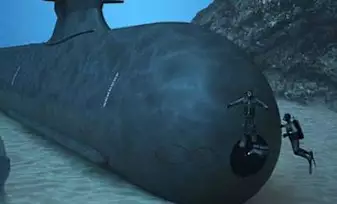
Wendy Rush, the wife of the pilot killed in a Titanic-bound submersible that coast guard officials say suffered catastrophic implosion, is the descendant of a couple who perished on the ship in 1912.
Rush is the great-great granddaughter of retailing magnate Isidor Straus and his wife, Ida, who were part of the group of more than 1,500 people who died during the Titanic’s maiden voyage, according to New York Times archive records.
The couple were fictionalized by Lew Palter as Isidor and Elsa Raven as Ida in the Oscar-winning 1997 film “Titanic,” directed by James Cameron.
While several of the scenes focusing on them in the movie were cut, a scene featuring the characters clutching each other on a bed as the ship went down became notably memorable.
Read more here.