AFRICA AT THE CROSSROADS: LEADERSHIP, ECONOMIC SOVEREIGNTY, CORRUPTION AND THE QUEST FOR TRANSFORMATION

AFRICA AT THE CROSSROADS: LEADERSHIP, ECONOMIC SOVEREIGNTY, CORRUPTION AND THE QUEST FOR TRANSFORMATION
From Kwame Nkrumah’s Pan-African Vision and Nelson Mandela’s Nation-Building Philosophy to Gaddafi’s Resource-Based Development, Rawlings’ Governance Challenge, Nigeria’s Petroleum Trust Fund Experience, Kagame’s Strategic Planning and Traoré’s Resource Sovereignty Agenda.
By Hon. Ibrahim Maina Waziri.
13th November, 2026.
1. INTRODUCTION: AFRICA’S DEVELOPMENT PARADOX.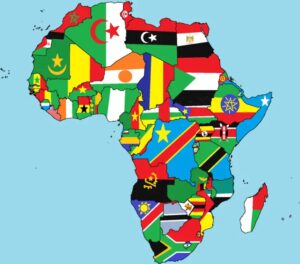
Africa occupies a unique position in the global economic and geopolitical landscape.
It possesses enormous natural resources, vast agricultural potential, a youthful population, strategic geographical advantages and considerable human capital. It is home to significant deposits of petroleum, natural gas, gold, diamonds, lithium, cobalt, uranium and other minerals essential to modern industrialisation and technological advancement. Yet, despite these advantages, many African countries continue to grapple with poverty, unemployment, inadequate infrastructure, institutional weaknesses, insecurity, economic dependency and unequal distribution of national wealth.
This presents one of the most fundamental questions of our time:
Why has a continent so richly endowed with natural and human resources struggled to translate its enormous potential into sustainable prosperity for the majority of its people?
The question becomes even more important when we examine the historical experiences of African leadership.
From Kwame Nkrumah’s advocacy of continental economic independence to Nelson Mandela’s pursuit of reconciliation and nation-building; from Muammar Gaddafi’s utilisation of petroleum revenues for social infrastructure to Jerry John Rawlings’ criticism of the unequal relationship between rural producers and urban beneficiaries; from Nigeria’s Petroleum (Special) Trust Fund under General Sani Abacha’s administration to Paul Kagame’s strategic development planning and Ibrahim Traoré’s contemporary resource sovereignty agenda, Africa has experienced different approaches to governance and development.
These experiences provide valuable opportunities for reflection. However, the purpose of this discourse is neither to glorify particular personalities nor to condemn entire administrations. It is to examine what African countries have attempted, what they achieved, where they encountered difficulties and, most importantly, what lessons can be drawn from their experiences.
The central argument is that Africa’s development challenge cannot be addressed through political independence alone, natural resource ownership alone or changes in political leadership alone. It requires accountable institutions, productive economies, strategic planning, equitable resource distribution and leadership committed to the long-term welfare of citizens.
*2. KWAME NKRUMAH: THE UNFINISHED PROJECT OF AFRICAN ECONOMIC INDEPENDENCE.*
Kwame Nkrumah occupies a special place in the history of African political thought.
As Ghana’s first Prime Minister and subsequently its first President, Nkrumah understood that political independence without economic independence could leave African countries vulnerable to external economic influence.
His philosophy extended beyond the territorial boundaries of Ghana. He envisioned an Africa capable of determining its own economic priorities, negotiating internationally from a position of collective strength and developing its industrial capacity. His Pan-African philosophy advocated greater political cooperation, economic integration and continental solidarity.
Nkrumah believed that Africa’s fragmented political and economic arrangements weakened its ability to negotiate effectively with more industrialised economies. His administration therefore pursued industrialisation, infrastructure development, education and agricultural modernisation.
The Volta River Project, including the Akosombo Dam, represented one of the most ambitious expressions of his industrial development vision. His objective was to provide the electricity required to support industrial production and economic modernisation. However, his development programme also encountered significant economic difficulties, including financing pressures, external debt, implementation challenges and concerns about the centralisation of political power.
His government was overthrown in a military coup in 1966. Nevertheless, his central argument remains relevant:
Africa cannot achieve meaningful economic sovereignty if it continues to export predominantly unprocessed raw materials while importing finished products, advanced technology and industrial capabilities. The continent must move beyond being primarily a supplier of commodities towards becoming a centre of production, innovation, manufacturing and technological development. The lesson from Nkrumah is that political independence must be accompanied by productive economic capacity.
*3. NELSON MANDELA: POLITICAL LIBERATION, RECONCILIATION AND NATION-BUILDING.*
Nelson Mandela represents another important dimension of African leadership. His emergence as South Africa’s first democratically elected Black President in 1994 marked a historic transition from apartheid to democratic governance. Mandela inherited a deeply divided society characterised by racial discrimination, economic exclusion, institutional inequality and historical injustice.
Rather than allowing the country to descend into perpetual political revenge, his administration pursued national reconciliation, democratic institution-building and peaceful coexistence. His leadership demonstrated that national development requires more than political authority. It requires the ability to build confidence among citizens, establish legitimate institutions and create an environment in which people of different backgrounds can participate in national development.
However, South Africa’s subsequent experience also illustrates an important distinction between political liberation and economic transformation. The dismantling of apartheid did not automatically eliminate historical economic inequalities. Unemployment, unequal asset ownership, poverty and structural economic disparities remained significant challenges.
This raises an important question:
Can a country achieve political freedom without simultaneously developing an economic framework that enables its citizens to participate meaningfully in national prosperity?
Mandela’s contribution should therefore be examined not simply through the achievement of political liberation but also through the continuing challenge of translating democratic freedom into economic inclusion. The lesson is that reconciliation and democratic stability are essential, but they must be accompanied by economic opportunities, quality education, productive employment and equitable development.
*4. MUAMMAR GADDAFI: NATURAL RESOURCE WEALTH AND SOCIAL INVESTMENT.*
Libya’s experience under Muammar Gaddafi offers another important case study. Following his assumption of power in 1969, Libya underwent significant economic and social changes, particularly through the utilisation of petroleum revenues. Oil wealth provided the government with substantial financial resources to invest in public infrastructure and social services. During his administration, Libya developed extensive programmes involving:
– Public education.
– Healthcare provision.
– Housing.
– Electricity.
– Road infrastructure.
– Subsidised essential commodities.
– Water supply and agricultural development.
One of the most ambitious projects was the Great Man-Made River, an extensive engineering undertaking designed to transport fossil groundwater from desert aquifers to population centres and agricultural areas. The project demonstrated the possibilities of deploying natural resource revenues towards addressing fundamental national development challenges. By 2010, Libya ranked first among African countries in the United Nations Human Development Index.
Its economic achievements and relatively high income levels provided an important example of how natural resource revenues could finance social investment. Gaddafi also advocated greater African continental integration and promoted ideas involving African financial independence and stronger continental institutions. Nevertheless, an honest assessment must recognise the authoritarian character of his government.
Political opposition was severely restricted, independent institutions were weak, and power became highly concentrated around his leadership. The eventual collapse of his government in 2011 exposed serious institutional vulnerabilities. The subsequent instability demonstrated the danger of building national governance structures around an individual leader rather than durable institutions.
The lesson is important:
Natural resource wealth can finance substantial development, but economic achievements must be supported by transparent institutions, democratic accountability and mechanisms capable of sustaining national progress beyond individual administrations. Libya’s experience therefore provides both an example of resource-funded social investment and a warning about institutional fragility.
*5. JERRY JOHN RAWLINGS: THE PARASITIC RELATIONSHIP BETWEEN RURAL AND URBAN COMMUNITIES.*
The late former Ghanaian President Jerry John Rawlings introduced an important dimension to the African development debate. His observations about the relationship between rural communities and urban centres deserve particular attention.
Rawlings challenged what he described as a parasitic relationship in which urban elites benefited disproportionately from the labour and economic contributions of rural populations. His argument was that rural communities produce agricultural wealth and sustain national economies, yet frequently receive inadequate investment in return. This observation reflects a recurring development challenge across many African countries. Consider the situation in numerous agricultural communities.
Farmers cultivate the land, produce food and supply raw materials to commercial centres. However, they often lack access to modern agricultural equipment, irrigation, storage facilities, affordable financing, processing industries and reliable transportation.
Consequently, much of the economic value generated from their production is captured elsewhere in the supply chain. Meanwhile, urban centres attract disproportionate public investment, commercial opportunities and social infrastructure. The consequences are visible in rural poverty, youth migration, unemployment and uneven regional development. Rawlings’ argument therefore raises a fundamental governance question:
Why should communities that contribute significantly to national production remain among the least developed areas of their countries? His emphasis on participatory governance and local development priorities offers an important lesson. Development planning must not be restricted to central government offices or urban political elites. Rural communities must participate in determining their development priorities and benefit more directly from the wealth they help create.
This requires agricultural value addition, rural industrialization, local infrastructure, accessible healthcare, education and effective decentralization. A nation cannot achieve balanced prosperity when its productive rural communities remain economically marginalised.
*6. NIGERIA’S PETROLEUM (SPECIAL) TRUST FUND: THE ABACHA ADMINISTRATION AND THE BUHARI MANAGEMENT EXPERIENCE.*

Nigeria provides an interesting domestic example of targeted public investment through the Petroleum (Special) Trust Fund. The PTF was established in 1994 under General Sani Abacha’s administration following changes in petroleum pricing arrangements. Its purpose was to channel additional petroleum revenue towards rehabilitating critical national infrastructure.
General Muhammadu Buhari was appointed Chairman of the Fund in 1995. The programme covered several sectors, including:
– Road rehabilitation.
– Healthcare infrastructure.
– Educational facilities.
– Water supply.
– Agricultural development.
– Transportation infrastructure.
The PTF attracted considerable public attention because its activities were visible across different parts of the country. It provided an example of a specialised intervention mechanism through which petroleum revenues could be directed towards identifiable development priorities. However, it is important to distinguish the establishment of the Fund under Abacha’s administration from Buhari’s subsequent responsibility for its management.
The PTF also had implementation challenges.
A 2003 academic evaluation of its educational and health infrastructure rehabilitation programme in North-Western Nigeria found that project quality was generally satisfactory and that there were no cost overruns in the projects examined. However, the study also identified significant implementation delays, with 72.6 per cent of projects behind schedule at the scheduled completion point. This provides a more balanced understanding of its performance.
The wider question is why Nigeria has struggled to sustain specialised, adequately funded and effectively monitored development programmes across successive administrations. Why should infrastructure rehabilitation, healthcare improvement and educational development depend on temporary intervention programmes rather than strong, permanent institutions?
The PTF experience raises important questions about project management, administrative discipline, transparency, procurement and continuity of public investment. It also demonstrates that the effectiveness of public expenditure should be measured through completed projects, service delivery and tangible benefits to citizens.
The broader lesson is that national resources must be channelled through institutions capable of delivering measurable outcomes.
*7. MUHAMMADU BUHARI AND DAVID CAMERON: THE INTERNATIONAL DIMENSION OF CORRUPTION.*
In May 2016, during an international anti-corruption summit in London, then British Prime Minister David Cameron was overheard describing Nigeria and Afghanistan as fantastically corrupt.
The Archbishop of Canterbury, Justin Welby, intervened by observing that Buhari himself was not corrupt and was making efforts to address corruption. When Buhari was subsequently asked whether he expected an apology, his response attracted international attention. He indicated that he was not interested in an apology.
He wanted something tangible: the return of Nigeria’s stolen assets.
His response brought attention to a dimension of corruption that is frequently overlooked in domestic discussions. Public resources may be stolen within African countries, but the proceeds can move through international financial systems, property markets, corporate structures and other jurisdictions.
This means corruption cannot be understood exclusively as a domestic African problem. It also requires examining the international networks that facilitate the concealment, movement and investment of illicit wealth.
African governments must strengthen their anti-corruption institutions, financial intelligence systems, procurement transparency and asset recovery mechanisms. Equally, international financial centres and jurisdictions must cooperate in identifying, freezing and returning stolen public assets.
However, asset recovery must also be accompanied by transparent management of returned funds. Recovering stolen wealth only to subject it to another cycle of mismanagement would defeat the purpose. The ultimate objective must be to return public resources to the citizens whose development opportunities were denied through corruption.
*8. PAUL KAGAME: STRATEGIC PLANNING AND THE RWANDAN DEVELOPMENT EXPERIENCE.*
Rwanda’s development experience under Paul Kagame offers another important case study. Following the 1994 genocide, Rwanda faced extraordinary challenges involving national reconstruction, institutional rebuilding, security, healthcare, education and economic recovery. The government pursued long-term development strategies, including Vision 2020 and subsequently Vision 2050.
Its development agenda included:
– Digital transformation.
– Public-sector modernisation.
– Infrastructure development.
– Healthcare expansion.
– Education.
– Tourism.
– Investment promotion.
– Human capital development.
– Agricultural modernisation.
Rwanda has recorded substantial economic growth.
The World Bank reported average annual GDP growth of approximately 7.4 per cent between 2000 and 2023, alongside improvements in life expectancy, healthcare access and educational attainment.
These achievements deserve examination, particularly the importance of policy consistency and long-term development planning. However, Rwanda’s governance model has also attracted criticism. Concerns have been raised by international human rights organisations regarding political competition, restrictions on opposition activities, freedom of expression and civil liberties.
These concerns cannot be ignored when examining the sustainability of its development model. The important lesson is that strategic planning, administrative effectiveness and policy continuity can contribute significantly to national development.
Nevertheless, sustainable transformation must also be supported by accountability, independent institutions, respect for fundamental rights and meaningful citizen participation. Development and democratic accountability should not be treated as mutually exclusive objectives.
Africa must learn from Rwanda’s institutional and planning experiences while recognising the importance of strengthening democratic safeguards.
*9. IBRAHIM TRAORÉ: RESOURCE SOVEREIGNTY AND THE QUEST FOR ECONOMIC SELF-DETERMINATION.*
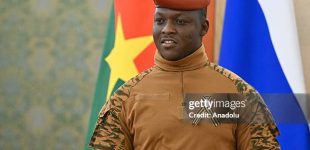
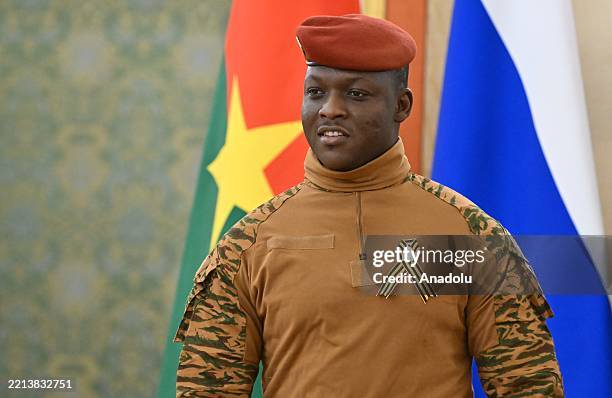
The emergence of Captain Ibrahim Traoré as Burkina Faso’s transitional leader has generated considerable interest across Africa. His political message has emphasised sovereignty, national control over natural resources, domestic production and reduced dependence on external powers.
These themes resonate with a longstanding African development debate.
Burkina Faso possesses significant gold resources, and the mining sector is important to its national economy.
Its 2024 mining reforms sought to increase state participation, strengthen government revenue collection and promote local content.
The revised framework increased the state’s free-carried participation in mining operations from 10 to 15 per cent, alongside changes to royalty arrangements and provisions intended to strengthen local participation.
These developments are important because they address the question of how resource-rich countries can retain greater economic value from their natural resources.
The agricultural sector has also received attention through initiatives intended to strengthen domestic food production.
However, we must distinguish between policy announcements, legislative changes, implementation and measurable improvements in citizens’ living conditions.
Burkina Faso continues to face serious security and humanitarian challenges.
Economic growth alone does not automatically establish that the population has experienced corresponding improvements in security, employment, income and access to public services.
Therefore, Traoré’s administration should be examined through the opportunities and challenges associated with its resource sovereignty agenda.
The central question is:
Can greater national ownership of natural resources be translated into local industrialisation, employment, technological advancement and improved living standards? The answer will depend not only on ownership but also on management, institutional accountability, technical capacity, investment an