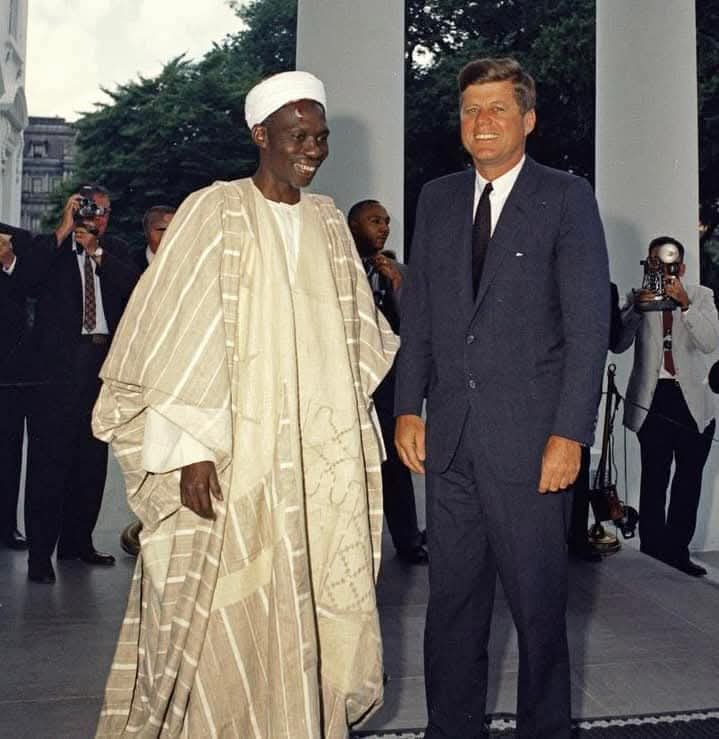
Editorial – The Fulani Code of Justice

The Fulani and the Code of Justice: Understanding a Misunderstood People
By Hf Dauda MoiSoro
In today’s digital world where misinformation and oversimplification travel fast, it’s easy to misrepresent entire communities—especially those like the Fulani, who carry centuries of tradition, pride, and resilience.
Too often, the Fulani are painted in one-dimensional terms: either as aggressors or as victims. Yet to understand the Fulani, particularly the nomadic or pastoral segments, is to understand a deeply entrenched cultural code—one built not on law books or modern courts, but on honor, memory, and balance.
Draw First Blood, Pay the Price
There is a well-known saying across much of Northern Nigeria: “Don’t cross the Fulani unless you’re ready for the consequences.” It is not because they are inherently violent—far from it. But among many Fulani groups, especially the pastoralists, justice is direct, personal, and generational.
This is a culture where cattle are not just property, but the lifeblood of survival, status, and continuity. To kill a cow is to attack livelihood; to kill a herder is to start a story that will not end with the grave. Fulani culture places a premium on patience and planning—but it does not forget. Offenses are carried in memory, passed to sons and grandsons, until balance is restored.
Revenge Is Not Just Emotion—It’s a Social Institution
Where the modern state fails to deliver justice, traditional communities like the Fulani rely on internal mechanisms to preserve dignity and security. In this setting, revenge isn’t just retaliation—it’s a social institution. It ensures that wrongs are not normalized. It warns others not to exploit perceived weakness.
Communities in Plateau, Taraba, Benue, Zamfara, and across the Sahel understand this well. Whether Nigeria remains one or breaks into many, the principles of personal justice will still be observed in the Fulani worldview. Geography will not dilute memory.
The Real Danger: Misunderstanding
What many outsiders perceive as “vengefulness” is, for the Fulani, the preservation of order in a world where formal protection rarely exists. These values are neither unique nor primitive—they echo across traditional societies everywhere, from Arab Bedouins to the Scottish clans of old.
But unless we learn to engage with these realities with wisdom, empathy, and dialogue, we will keep cycling through violence and blame. Misunderstanding breeds fear; fear breeds conflict.
The Way Forward
Nigeria’s challenge is not the Fulani. It is the absence of a national framework that protects every citizen, regardless of ethnicity or lifestyle. Until justice is accessible and fair, people will resort to the systems they know—even if those systems are centuries old.
Understanding is not endorsement, but it is the beginning of resolution. If we are serious about peace, we must learn to read the people behind the headlines.