ON NIGERIA’S FOREIGN POLICY AND DIMINISHED GLOBAL STANDING…
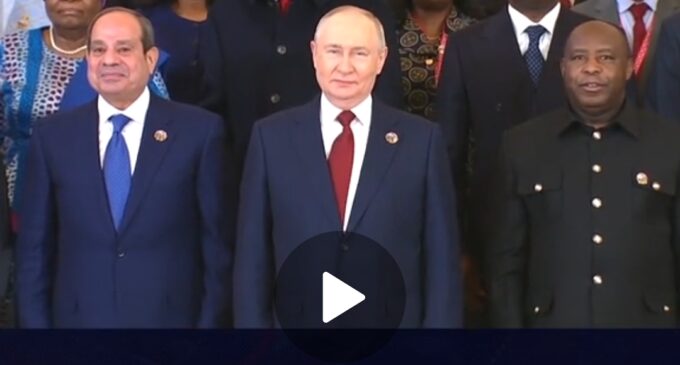
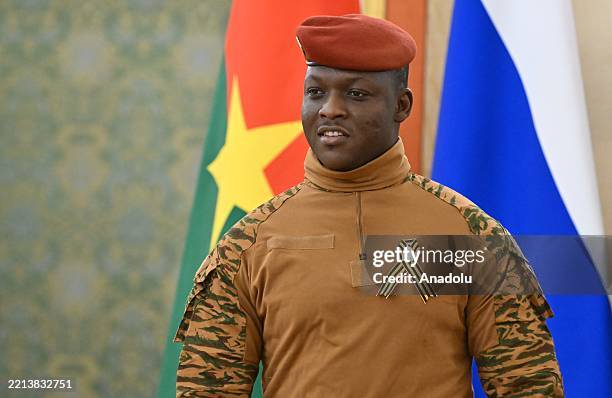
The Russia-Africa Summit is currently underway in Russia. Delegates from 48 out of Africa’s 54 nations are in attendance. Twenty-two of those nations are represented by their heads of state.
Their presence underscores the importance those states place on functional relations with Russia in an increasingly multipolar world.
Some African countries represented by their heads of government include Egypt, Kenya, Rwanda, DRC, Ghana, Mali, Ethiopia, and of course South Africa which just rebased its economy to climb to the summit on the continent.
By contrast, Nigeria decided to send its third eleven to the summit when only our best would have sufficed.
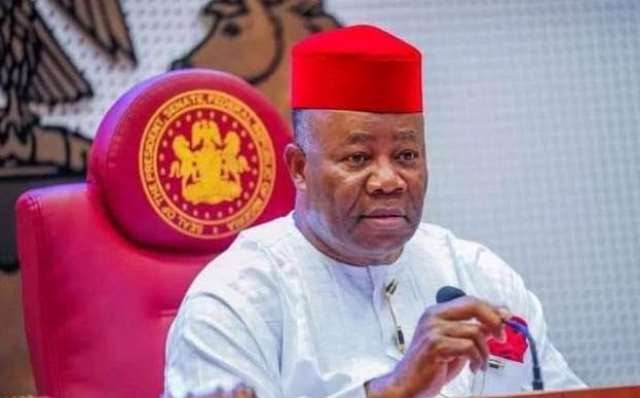
We all know that such critical summits have become like a taboo to President Tinibu in recent times, but then, neither the Vice President Shettima who has become his customary representative at such occasions, or the Foreign Minister Bianca Ojukwu are currently in Moscow.
Instead, Nigeria opted to send lower level delegation led by her Deputy Sola Enikanolaiye, the Minister of state in the ministry.
If the snub was unmistakable, the next question to ask should be why? Russia is not an ordinary nation in global affairs by any stretch of the imagination.
Russia was the most critical member of the defunct Soviet Union and is among the five permanent members of the United Nations Security Council. It inherited almost all of the vast nuclear arsenal from the Soviet Union.
It stood solidly behind Nigeria in the rejection of the ridiculous and patently racist policy of “constructive engagement” shamelessly adopted by the West led by Britain and America in the continental effort to dismantle apartheid in South Africa. That well-documented effort earned Nigeria the honorary recognition as one of the Frontline States against imperialism in southern Africa. That was the golden age of Nigerian Foreign Policy.
The Soviet Union was also virtually in the trenches with Nigeria during our Civil War. It provided us with vital weapons and diplomatic foil at a time France, which has now become Tinubu’s secondary home, was among the few countries that recognized Biafra and led efforts that unnecessarily prolonged the conflict.
To the chagrin of France and a few of its proxies on the African continent, the Nigeria emerged from the Civil War, a much stronger nation. It spearheaded the creation of ECOWAS comprised of English speaking and Francophone African states, which the French saw as a direct affront to its criminal and exploitative hagemony in the sub-region.
Nigeria’s leadership of ECOWAS enabled it to intervene decisively to stop the Civil Wars in Liberia and Sierra Leone to the extent that the former American president Bill Clinton referred to the nation a moral superpower during one of his visits.
Today, the same ECOWAS is in tatters largely due to Tinubu’s incompetent leadership in his capacity as Chairman barely months after he was sworn into office in 2023.
His threat to invade Niger after the military coup that toppled the French stooge in Niamey was the first blunder.
The second was his open romance with France, which has been kicked out of Burkina Faso, Mali, and Niger. The three nations proceeded to form a breakaway Alliance of Sahelian States (AES).
Needless to add that all of these three nations are crucial in Nigeria’s quest to combat terrorism and cross-border banditry that has become a major threat to our national security. His frequent junkets to France suggest that the issue is not a major concern to President Tinubu.
Today, Nigeria has lost much of the significant clout it gloriously demonstrated in the international arena to countries like Ghana and South Africa, which we helped to liberate in the 1990s.
That much is evident in their formidable debates and contributions at the United Nations at the same time Nigeria is increasing ly appearing as a proxy of America if not a vassal of France.
And so the Americans can whimsically bomb Nigeria over the ridiculous allegation of Christian genocide without as much as a diplomatic reburke from Abuja while sending a delegation to Washington to appease our aggressor.
The same attitude is now also clearly shamelessly manifested by this administration in the manner it has chosen to distance itself from Russia in the vain effort to please Washington.
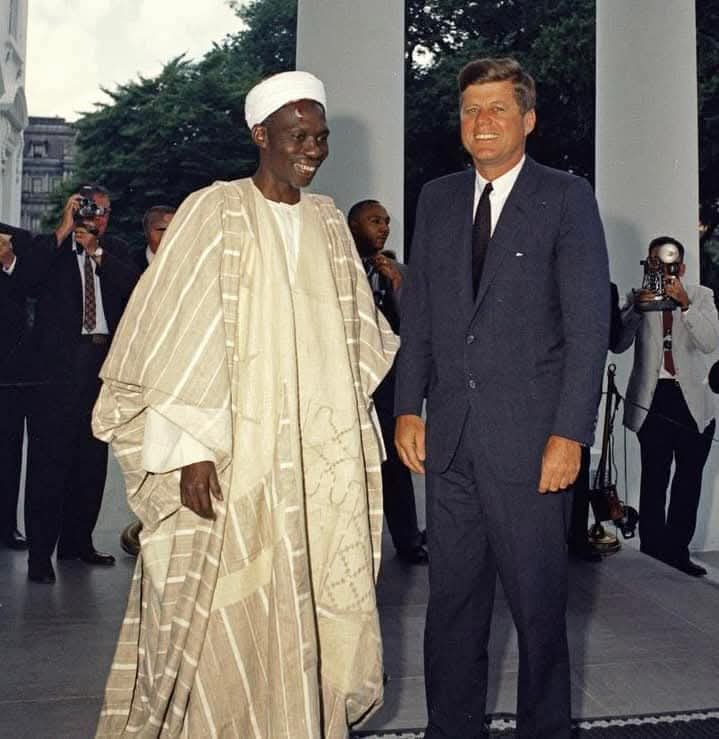
This was the same Nigeria, which, under the courageous leadership of Murtala Muhammad, rejected American dictates to lead the liberation struggles in Mozambique, Zimbabwe, Angola and South Africa.
Ghana, which can only dream of a fraction of our human and natural recourses, now appears to have stepped up to fill the void in providing impactful leadership for West Africa under its present leadership.
Today, if the entire continent is now laughing at us, the compelling question to ask – given President Tinubu’s frequent junkets to France which is viewed with deep suspicion by our neighbours – is whether our foreign policy under his leadership is consistent with Nigeria’s vital national security interests.
Nigeria is bigger and greater than any single individual, and the last time I checked, we are not a constitutional monarchy.
#Nigeria’sDiminishedGlobalStatus
https://pmnewsnigeria.com/2019/10/24/how-russia-helped-nigeria-defeat-biafra-during-civil-war-buhari/
https://www.africarebirth.com/4-major-reasons-why-france-prolonged-the-three-year-biafran-civil-war/
https://www.thisdaylive.com/2023/02/26/renewing-the-golden-years-of-nigerias-foreign-ministry-the-arcan-and-environmental-conditionality/